Train Smart. Work Smarter.

May 8, 2026 admin
Input Validation and Sanitization
Input validation and sanitization are crucial security practices that ensure safe and reliable data handling in software applications. They work together to prevent issues like security vulnerabilities, data corruption, and unexpected program behavior.
Input Validation
What it does:
Checks if the user-provided data meets specific criteria before accepting it.
Why it’s important:
Validation helps prevent malicious attacks (e.g., SQL injection) and ensures data integrity by rejecting invalid inputs.
Example:
Imagine a web form that collects a user’s age. Validation would involve checking if the entered value:
Is a number (not text).
Falls within a reasonable age range (e.g., 13-100).
If the validation fails, the user would be notified to enter a valid age.
Input Sanitization
What it does:
Cleanses user input to remove potentially harmful characters or code.
Why it’s important:
Sanitization protects against attacks like cross-site scripting (XSS) where malicious scripts are injected into seemingly harmless data.
Example:
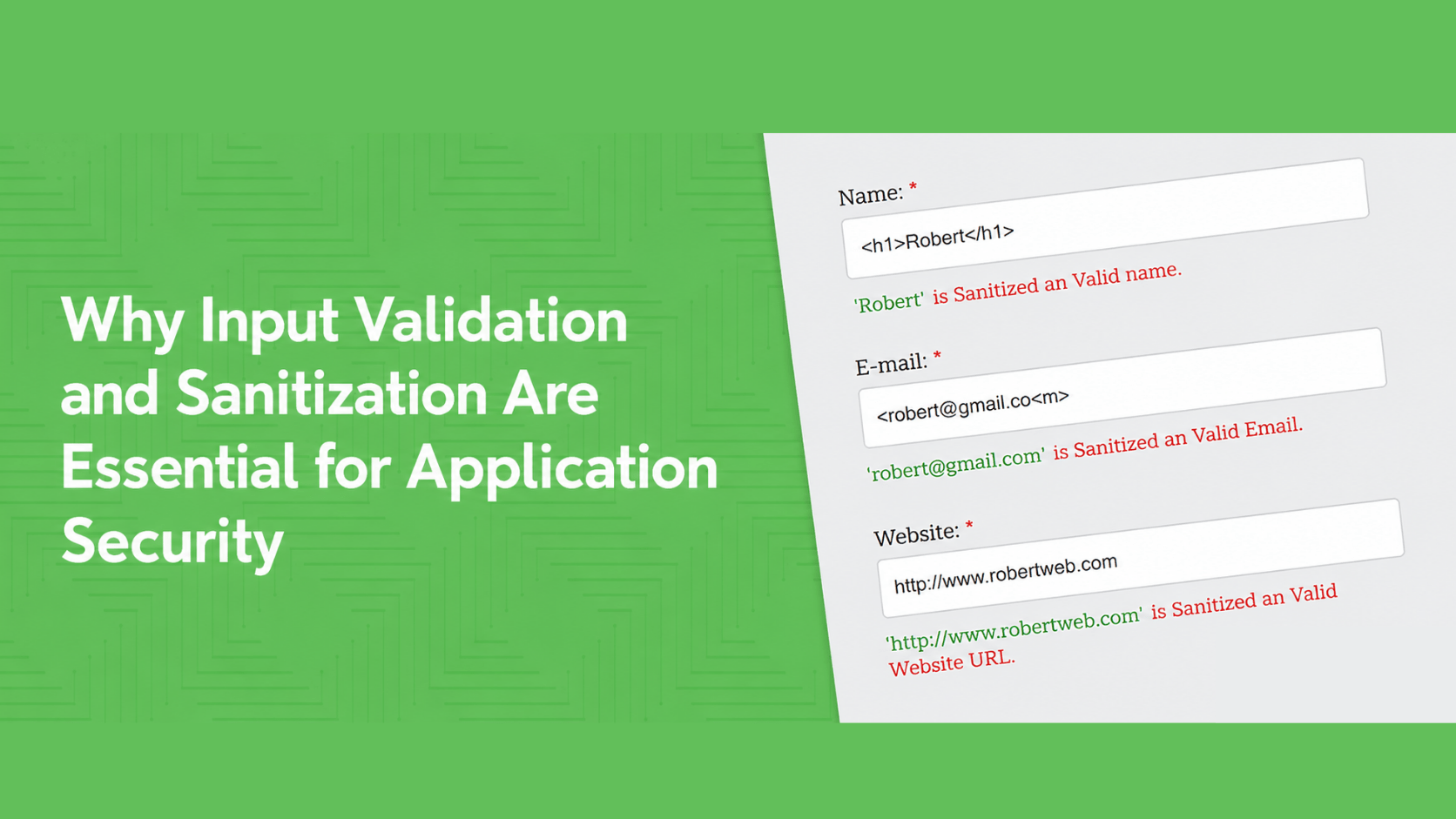
A forum allows users to post comments. Sanitization would remove or encode any HTML tags present in the comment to prevent them from executing as scripts.
How they work together:
Think of validation as a bouncer at a club. It checks if users meet the entry criteria (e.g., age requirement). Sanitization is like a security scanner that ensures users aren’t bringing in any dangerous items.
Here’s a breakdown of the process:
User submits data (e.g., email address in a login form).
Validation checks the format of the email (e.g., presence of “@” and “.”).
Sanitization removes any special characters that could be harmful.
If both validation and sanitization succeed, the data is processed securely.
If either step fails, the user is notified to correct the input.
