Train Smart. Work Smarter.

May 12, 2026 admin
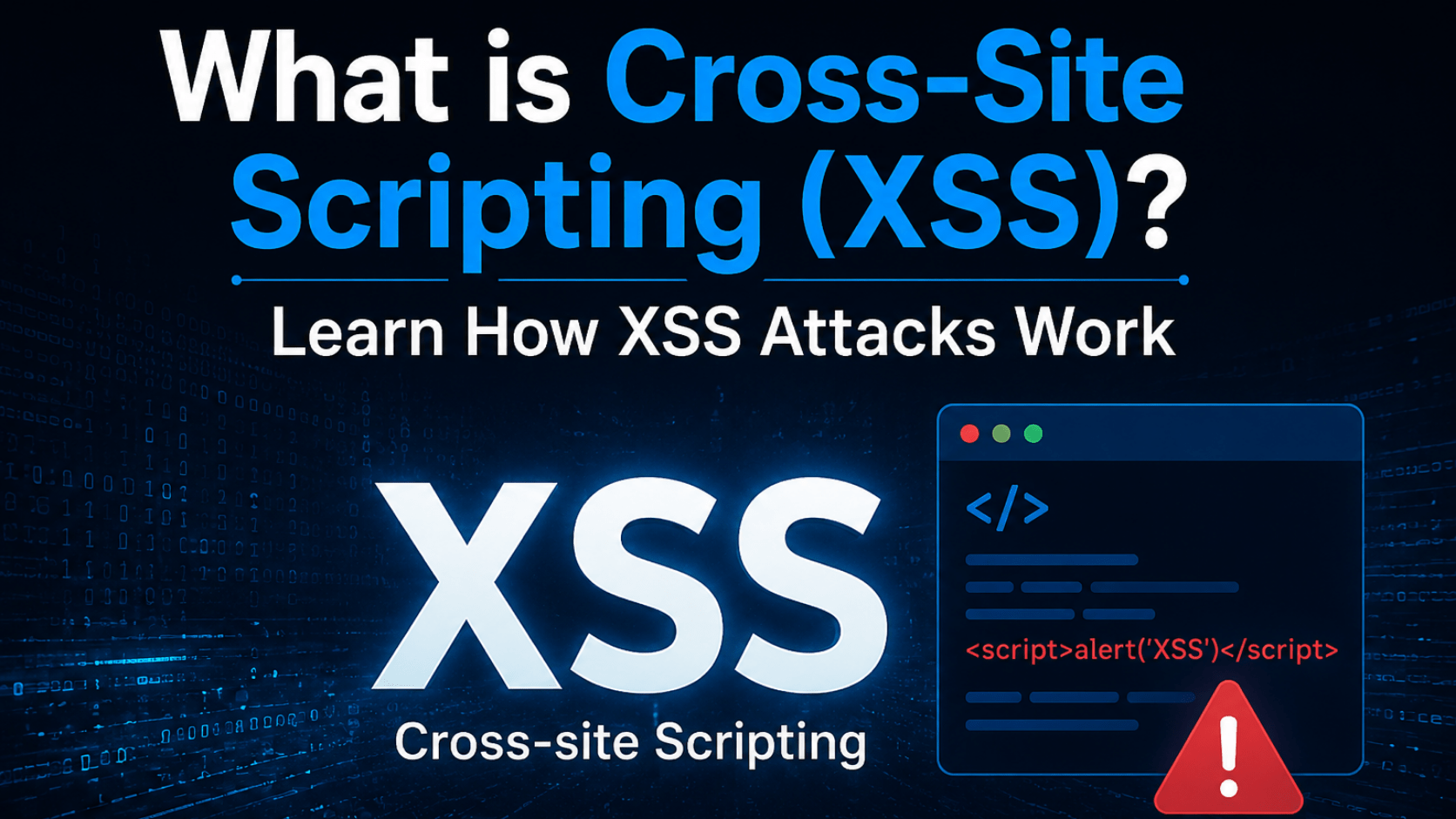
What is Cross-Site Scripting (XSS)?
What is Cross-Site Scr What is Cross-Site Scripting (XSS)?
Cross-Site Scripting (XSS) is a common web security vulnerability. Attackers inject malicious scripts into trusted websites. These scripts run inside the user’s browser and target sensitive information.
XSS attacks can steal cookies, hijack user sessions, redirect users to harmful websites, and modify webpage content.
Simple Example of an XSS Attack
Imagine a website with a public comment section. The website displays user comments directly on the page.
If developers do not validate user input properly, an attacker can add a malicious script inside a comment.
When another user opens the page, the browser executes the script automatically. The attacker may then steal cookies or session data.
Types of XSS Attacks
Stored XSS
In a Stored XSS attack, the attacker saves a malicious script on the website server.
The script may appear in:
- Forum comments
- User profiles
- Message boards
- Feedback forms
Whenever users visit the infected page, their browsers execute the script.
Reflected XSS
In a Reflected XSS attack, the attacker inserts a malicious script into a URL or form input.
If the website fails to validate the input, it reflects the script back to the browser. The browser then executes the malicious code.
Attackers often spread these links through phishing emails or fake websites.
Risks of XSS Attacks
XSS attacks can cause serious security problems. Attackers may:
- Steal cookies
- Hijack user sessions
- Display fake login forms
- Redirect users to malicious websites
- Access sensitive information
- Perform unauthorized actions
How to Prevent XSS Attacks
Developers can reduce XSS vulnerabilities by following secure coding practices.
Validate User Input
Always check and sanitize user input before storing or displaying it.
Escape Output Data
Escape special characters before rendering content in the browser.
Use Content Security Policy (CSP)
Implement a strong Content Security Policy (CSP) to block unauthorized scripts.
Keep Applications Updated
Update web applications, plugins, and frameworks regularly to reduce security risks.
Why XSS Protection Matters
XSS attacks threaten both users and websites. Strong validation, secure coding practices, and proper browser security help protect web applications from malicious scripts and unauthorized access.
